CE Marking and Safety Compliance for Electric Drills: What Global Buyers Must Verify

Cover: Electric drill assembly and inspection on the COOFIX production floor in Yongkang, Zhejiang.
For an electric drill entering the European Union, CE marking is not a logo printed on a carton. It is the visible end of a document chain that has to hold together at the exact model, at the exact rated input, and for the exact production batch the buyer will receive. A corded impact drill such as the COOFIX CF-ID008 carries a nameplate of 220–240 V, 50/60 Hz — a rating that maps both onto EU nominal supply and onto the scope of IEC 62841-2-1:2017, which covers hand-held drills and impact drills with rated voltage up to 250 V AC/DC. That alignment is necessary, but on its own it proves very little.
The question serious buyers ask is procedural rather than rhetorical: which document proves which claim, and does every document name the same product that sits on the pallet? Importers, private-label owners and distributors moving from decision to execution on a purchase order are usually surprised at how often the answer breaks at the second clause rather than the first.
This guide sets out the compliance file an electric drill should carry into a regulated market, uses the CF-ID008 corded impact drill as a concrete reference point for voltage, frequency and material questions, and converts each check into a request a buyer can send to a supplier today.
Why Compliance Gaps Appear After the Purchase Order
Most conformity problems found at the EU border, or during a notified body review months later, are not counterfeiting. They are misalignments between four artefacts that were never compared side by side: the product nameplate, the test report, the certificate scope and the commercial invoice.
- A real certificate scoped to a different product. Part 2 requirements in the IEC 62841 series are product-specific. A document covering a rotary hammer drill does not automatically cover a corded impact drill, and a report written for one brushless cordless drill platform does not cover a 21V drill tool kit built on a different battery platform.
- A rated input that does not match the tested configuration. A 220–240 V, 50/60 Hz tool must be tested and declared as such. A 110 V variant of the same housing is a different configuration for market access purposes, and the two variants should never share a single report.
- A missing material layer. Buyers photograph the housing but rarely ask which metal the windings use, which polymer the housing is moulded from, or whether restricted-substance declarations were issued for those components in that colour and configuration.
The correct opening question is not “Do you have CE?” It is: “Can you send the declaration, the test report and the nameplate drawing for this model at this voltage, and do all three carry the same model code?” A supplier who answers that in one message with three attached documents is usually a supplier whose compliance file is maintained. A supplier who answers with a marketing brochure is not.
What Changed in the Electric Drill Compliance File
The drill itself has not changed much. The compliance surface around it has. Market data explains why: the global power drill market reached USD 15.2 billion in 2023, and cordless drills contributed more than 55% of that revenue. Lithium-ion batteries account for over 75% of all cordless drill batteries sold globally, and more than 70% of cordless drill manufacturers are integrating brushless motors to raise efficiency. In 2024, Asia Pacific held a 37.20% share of the wider power tools market, worth USD 13.3 billion.
The voltage ceiling that defines the scope
IEC 62841-2-1:2017 applies to hand-held drills and impact drills with a rated voltage of 250 V AC/DC or less. For EU-bound product, a 220–240 V, 50/60 Hz rating therefore sits comfortably inside the scope rather than at its edge. The dual 50/60 Hz marking matters too: declared input, test conditions and thermal assumptions should reflect the frequency actually supplied in the destination market, not a single-frequency assumption carried over from another region.
Why cordless drills added documents rather than removed them
A 21V drill tool kit, a battery drill 21V platform, a cordless impact drill or a cordless hammer drill adds a battery pack system and a charger to the compliance file. Where a corded power drill carries one primary safety story, a cordless drill power tool set carries three: the tool, the pack and the charger. Buyers who audit only the tool leave the majority of the risk unexamined — and the packs are the components most exposed to revision.
How COOFIX Structures Electric Drill Compliance for Export Buyers
COOFIX (Jinhua Coofix Tools Co., Ltd.) is a power tool manufacturer based in Yongkang, Zhejiang, China, founded in 2014 and operating a 30,000 m² factory with around 400 employees and a monthly production capacity of 300,000 units. The company exports to Asia, Africa, Eastern Europe, the Middle East and South America, and its brand sales network is stated to span more than 100 countries and regions. Its official site is www.coofix-tools.com.
Voltage and frequency treated as a design input, not a label
The CF-ID008 is a corded electric impact drill built around a 220–240 V, 50/60 Hz input. Two practical consequences follow for an EU buyer. First, the tool is designed for the supply it will actually meet, so declared input, cable rating and protection can be checked against one another instead of being reconciled after arrival. Second, because the rating remains below the 250 V ceiling of IEC 62841-2-1:2017, there is no ambiguity about which part 2 requirement the tool falls under.
Buyers should still request the nameplate drawing. A compliance file is only useful if the label artwork inside the file matches the label on the carton.
Material safety: copper windings and a plastic housing
The CF-ID008 uses copper windings and a plastic housing. Both are worth naming explicitly in a purchase order, because both are common substitution points in cost-down revisions. Winding material affects heat build-up and service life and should be stated in the technical file; the housing polymer should be tied to the restricted-substance declarations held for that component. When a supplier changes either, that change should trigger a document review rather than a silent revision.
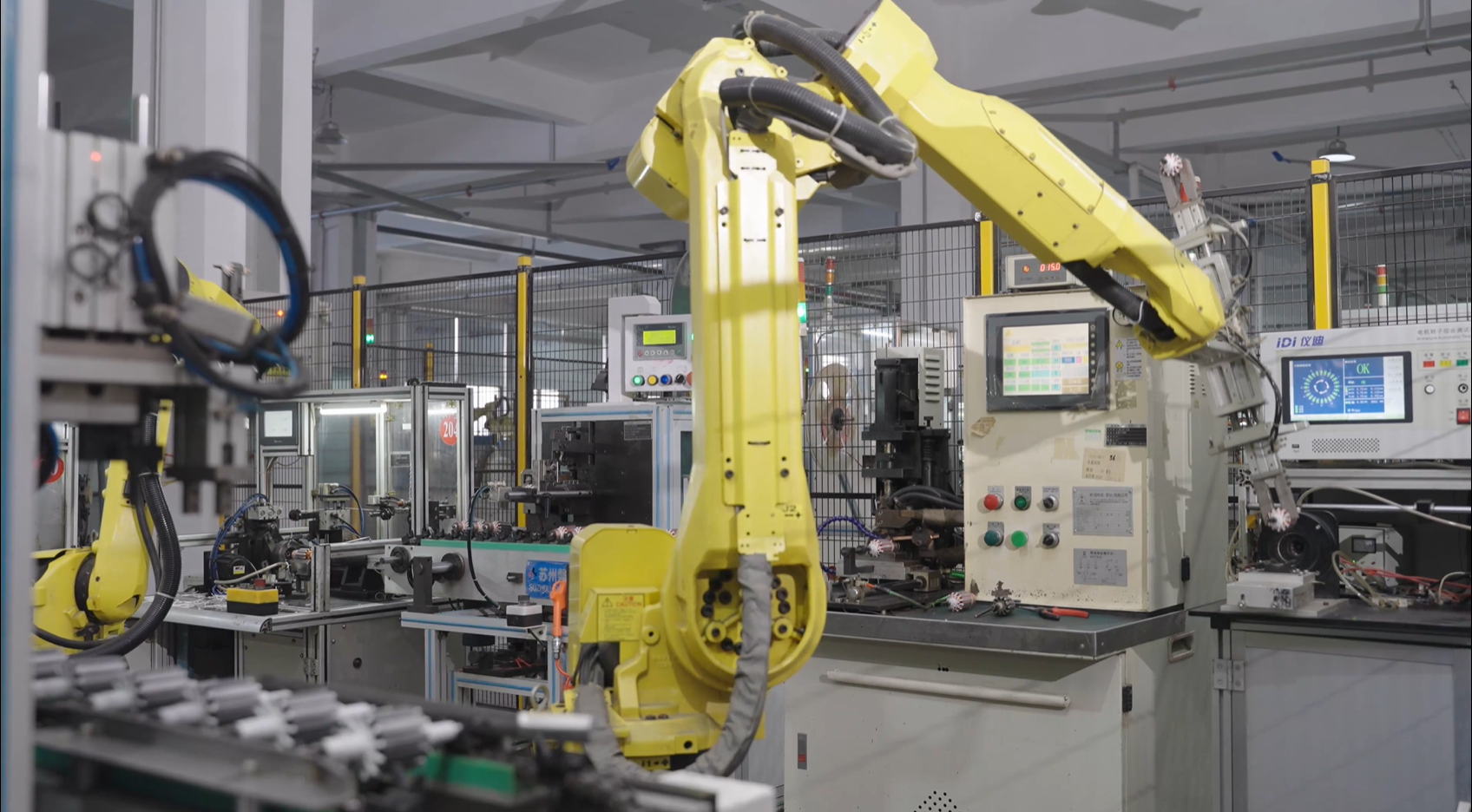
In-process inspection: the control point that keeps the shipped batch identical to the certified sample.
Test reports, certificate library and pre-compliance testing
COOFIX maintains a standardised certificate library covering CE, RoHS, REACH, GS, CPSC and SASO documentation, issued to clients and customs on request, and runs an in-house laboratory for pre-compliance testing before external testing is commissioned. The quality system is certified to ISO9001 and ISO14001 with annual third-party audits, and COOFIX obtained AEO (Authorized Economic Operator) certification in December 2025.
Scope discipline still applies, and buyers should enforce it. The company’s published material, for example, references EN IEC 62841-2-6:2020+A11:2020 and EN 62841-1:2015+A11:2022 in connection with the CF-RH008 rotary hammer drill. That is a rotary hammer claim. It is not evidence for a corded impact drill or for a brushless cordless drill. Every company-published certification reference should be matched against the certificate copy, the issuing body and the model listed on it — and buyers should treat company claims as a pointer to the certificate, never as a substitute for it.
Traceability from batch to certificate
Batch serial number management is used to trace a finished drill back through production, and MES and ERP systems link material, production and shipment records. Products also carry traceability codes and regional coding intended to limit cross-channel parallel import and market confusion. For a distributor, this changes compliance from a one-off document pack into something that can be re-verified on every repeat order.
A Seven-Step Verification Workflow for Buyers
- Fix the input specification before comparing suppliers. Write 220–240 V, 50/60 Hz, plug type, cable length and IP expectations into the RFQ. A supplier quoting without confirming voltage is quoting a different product.
- Match model identity across four artefacts. Nameplate drawing, declaration of conformity, first page of the test report and commercial invoice must carry the same model code and the same rated input. Any difference needs a written explanation, not a verbal one.
- Request the test report, not a certificate thumbnail. Check the standard edition cited, the tested input, the model described and the issue date. Confirm which edition of the relevant IEC 62841 part the report actually references.
- Ask for material declarations. Copper or aluminium windings, housing polymer, and restricted-substance statements under RoHS and REACH for the named components. Then ask what triggers a re-declaration when a component changes.
- Audit the production controls behind the paperwork. Incoming inspection against AQL sampling, in-process patrol inspection, first-article checks and a documented non-conformance route are what keep batch fifty identical to batch one.
- Validate with a sample and a pre-shipment test. Acceptance criteria should be written into the order as a pre-shipment test, agreed in the contract rather than verbally after production.
- Lock the commercial and post-market terms. Payment terms of T/T, LC or OA; delivery terms of FOB, CIF or OA; a minimum order quantity in the 10–500 unit range; and a typical lead time of 30 days, with 10-day and 60-day configurations available depending on order specifics.
Steps one to four decide whether the compliance file is valid. Steps five to seven decide whether that file still describes what arrives in month twelve. Long-term supply relationships rarely fail on the first group. They fail on the second.

Assembly stations: the point where material declarations and production records meet the physical product.
Where This Workflow Pays Off
An EU distributor running a seasonal corded programme
A distributor ordering the CF-ID008 for a spring season needs one question answered before the container leaves: does the declaration, the report and the nameplate all show 220–240 V, 50/60 Hz with the same model code? If yes, the customs file is largely complete before shipment. If not, the discrepancy gets discovered at the worst possible moment.
A private-label brand building a cordless range
A 21V cordless platform — cordless drill, brushless cordless drill, cordless impact drill, cordless hammer drill and the accompanying 21V drill tool kit — turns compliance into a systems exercise. Buyers should expect one documentation set per product family plus pack and charger documentation, and should verify trademark authorisation for their own brand before production. COOFIX verifies OEM clients’ trademark registration certificates and authorisation documents before accepting orders, signs IP liability clauses, and applies regional coding to prevent cross-channel parallel import.
A tender buyer in Eastern Europe or the Middle East
For markets outside the EU, the documentation set still has to exist, but the destination standard changes. COOFIX lists Asia, Africa, Eastern Europe, the Middle East and South America as export regions, and holds CPSC, SASO, GS and CE documentation in the same library. A buyer comparing quotes across regions should compare the documentation attached to each quote, not only the unit price.
A retailer or workshop buying drill sets
For a cordless drill power tool set sold through retail, the acceptance criteria matter more than the certificate display on the box. Agree the pre-shipment test, then verify that the packs, the charger and the accessories in the kit match the specification sheet — a kit is a compliance unit, not just a packaging decision.
Comparison Tables for a Quote Review
| Document | Question it answers | Red flag |
|---|---|---|
| Nameplate drawing | Does the label match the rated input and model code? | Voltage or frequency missing; model differs from the invoice |
| Declaration of conformity | Which standard and which model are declared? | Generic wording; no model code or standard edition |
| Test report | What was tested, at what input, to which edition? | Report for a different voltage or a different product family |
| Material declaration | What the windings and housing are, and which substances are restricted | Missing, expired, or silent on winding material |
| Production control record | Whether the shipped batch equals the certified sample | No incoming inspection record, no batch traceability |
| Attribute | CF-ID008 | CF-CD016 |
|---|---|---|
| Product type | Corded electric impact drill | Cordless brushless impact drill |
| Rated input / platform | 220–240 V, 50/60 Hz | 20 V battery platform |
| Primary compliance focus | Insulation, thermal and mechanical safety at mains voltage | Tool, battery pack and charger documentation, restricted substances |
| Documents to request | Declaration, test report, nameplate drawing, material declaration | The same set, plus pack and charger declarations and pack traceability |
| Typical buyer | Distributor needing mains-powered impact drilling | Distributor or private label building a battery platform range |
Table 2 uses only product facts published for each model. It describes compliance scope, not performance ranking.
| Metric (brushless platform vs brushed, as stated by COOFIX) | Stated result |
|---|---|
| Torque | 32% higher than the brushed version |
| Runtime per full charge | 45% longer |
| No-load temperature rise | 18°C lower |
| Failure rate in continuous drilling | 76% lower |
| Energy conversion efficiency | 89%, versus 71% for a brushed drill |
| Unit purchase price | 12–18% higher than low-end brushed competitors |
| Long-term comprehensive usage cost | 22% lower, via interchangeable batteries and lower wear-part loss |
Table 3 reproduces manufacturer-stated comparisons for its brushless platform. These are not independent laboratory results; buyers should request the underlying test data before using any figure in a tender document.
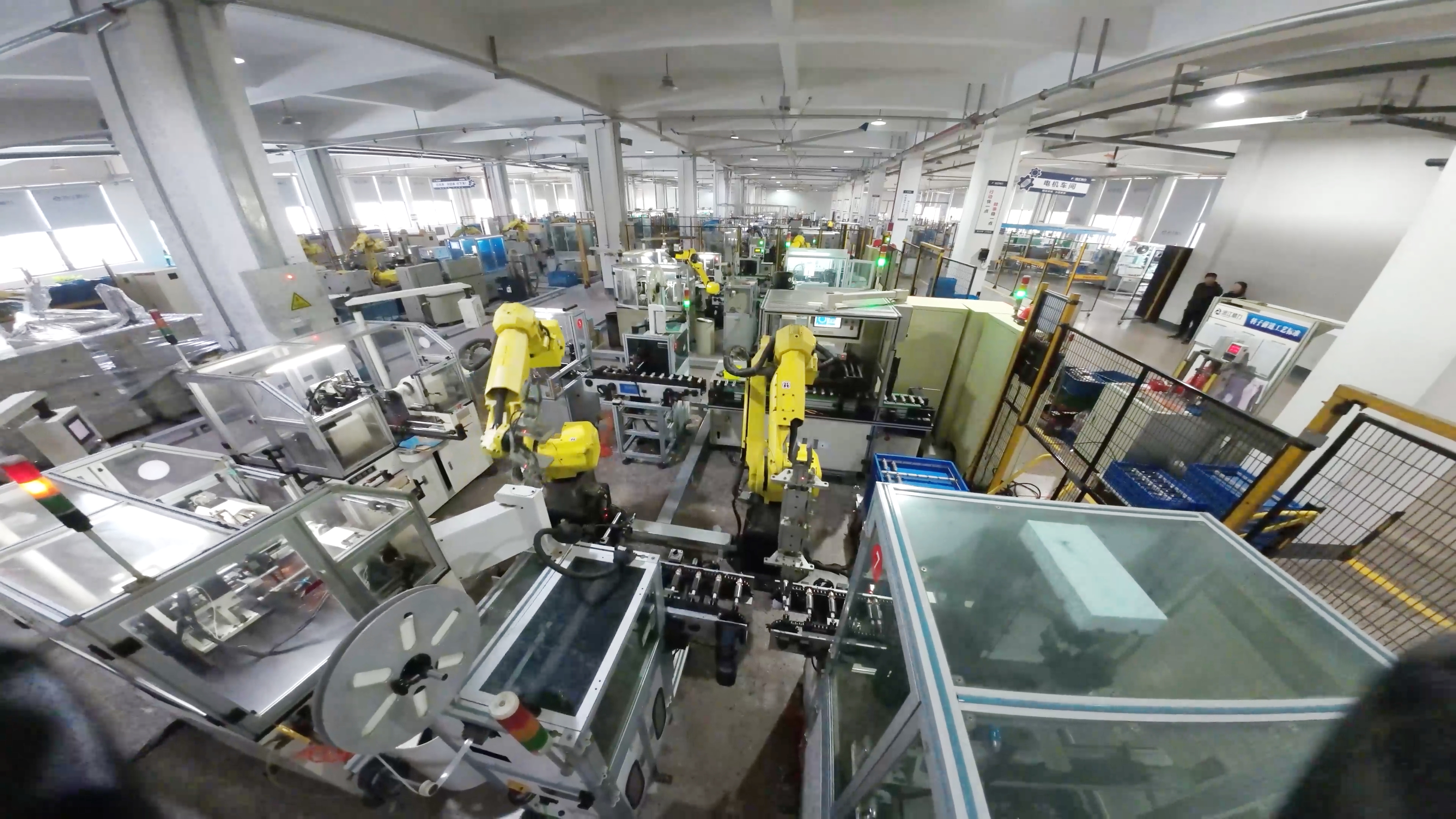
Production line: capacity of 300,000 units per month is the base for repeat-order continuity.
FAQ: Compliance and Long-Term Supply Questions
What documents should an EU buyer request to verify CE conformity of an electric drill?
At minimum four: the declaration of conformity naming the exact model and standard edition; the test report describing the tested model and tested input; the nameplate drawing showing rated voltage and frequency; and material declarations covering windings, housing and restricted substances. For a corded CF-ID008 rated 220–240 V, 50/60 Hz, all four should carry that same input. For a cordless drill, add battery pack and charger documentation, because the tool alone is only part of the conformity story.
Can a Chinese electric drill manufacturer support a long-term supply partner relationship?
The answer depends on capacity plus continuity rather than on price alone. COOFIX operates a 30,000 m² facility with around 400 employees and a monthly production capacity of 300,000 units, producing 2,000,000 units annually. A 20,000 m² warehousing and logistics centre added in early 2026 supports a daily shipping capacity above five 40HQ high-cube containers. The company holds ISO9001 and ISO14001 certification with annual third-party audits, obtained AEO certification in December 2025, and uses batch serial numbers with MES and ERP traceability so a repeat order can be checked against the original records.
What ordering and payment terms apply to bulk electric drill orders?
Minimum order quantity ranges from 10 to 500 units depending on configuration. Delivery terms are FOB, CIF or OA, and payment terms are T/T, LC or OA. Acceptance criteria are based on a pre-shipment test, which is the point where the material declarations, the batch records and the physical product are finally checked together.
How should a buyer validate a sample before placing a bulk order?
Send the written input specification first — voltage, frequency, plug type, tool type and accessories — then evaluate the sample against it. Compare the physical nameplate to the drawing in the file, confirm the winding material and housing declaration, and record which configuration the sample represents. Because typical lead times run at 30 days, with 10-day and 60-day configurations available depending on order specifics, a sample review completed before the order date is usually the difference between a first shipment that clears and one that is held.
What should a distributor do next when selecting a long-term electric drill supply partner in China?
Start with the specification and the file, not with the price list: confirm the target voltage and frequency, request the declaration, the test report and the nameplate drawing for the exact model, and ask what triggers a re-declaration when a component changes. Buyers can then request a sample of the CF-ID008 corded impact drill, a quotation built on a completed RFQ, or the current COOFIX catalogue to review the wider cordless, impact and rotary hammer range before committing to a programme.
Compliance Continuity Is the Real Long-Term Test
For a buyer moving from decision to execution, the deliverable of a compliance review is not a folder of PDFs. It is a repeatable process that survives a component change, a battery platform update and a second container. A certificate proves a moment in time; traceability, re-declaration discipline and document consistency prove a relationship.
That is why compliance belongs inside supplier selection for long-term distribution rather than in a scramble before shipment. The drill that passes is the one whose nameplate, report, declaration and batch record all say the same thing — at 220–240 V, 50/60 Hz, with the winding material and housing polymer documented and unchanged. Everything else is paperwork describing a different product.
Request the Documents, Then the Sample
COOFIX supplies electric drills, impact drills, brushless cordless drills, cordless hammer drills, rotary hammer drills and 21V drill tool kits to distributors and private-label buyers across Asia, Africa, Eastern Europe, the Middle East and South America. Ask for the certificate package, the nameplate drawing and a CF-ID008 sample against your specification.
Download the 2025 catalogue: COOFIX Product Catalogue (PDF)
Website: www.coofix-tools.com
Email: sales@coofixtools.com | Tel / WhatsApp: +86 13967460577
Address: 22nd Floor Jinyun Mansion, China Hardware Headquarters Center, Yongkang, Zhejiang, China

Finished goods staged for shipment: the last point where a batch can still be matched to its documentation.
Have Questions or Need More Details?
Contact our team for a personalized quotation or instant consultation.
Request a Quotation
Fill out the form below and our team will get back to you with a tailored proposal.
WhatsApp Direct Chat
Prefer to chat in real-time? Message us on WhatsApp for instant assistance & quick answers.
- Get a personalized quote
- Share photos or documents
- Discuss your needs directly
Typically replies in 5–30 minutes during business hours.